A ceasefire that bleeds: Gaza war repackaged as peace
TEHRAN – The October 10 ceasefire in Gaza was sold to the world to signal that Israel’s war on the Palestinian enclave had finally stopped. In reality, it may be one of the most effective political tools yet devised to keep the machinery of destruction running while convincing the international community that peace has arrived.
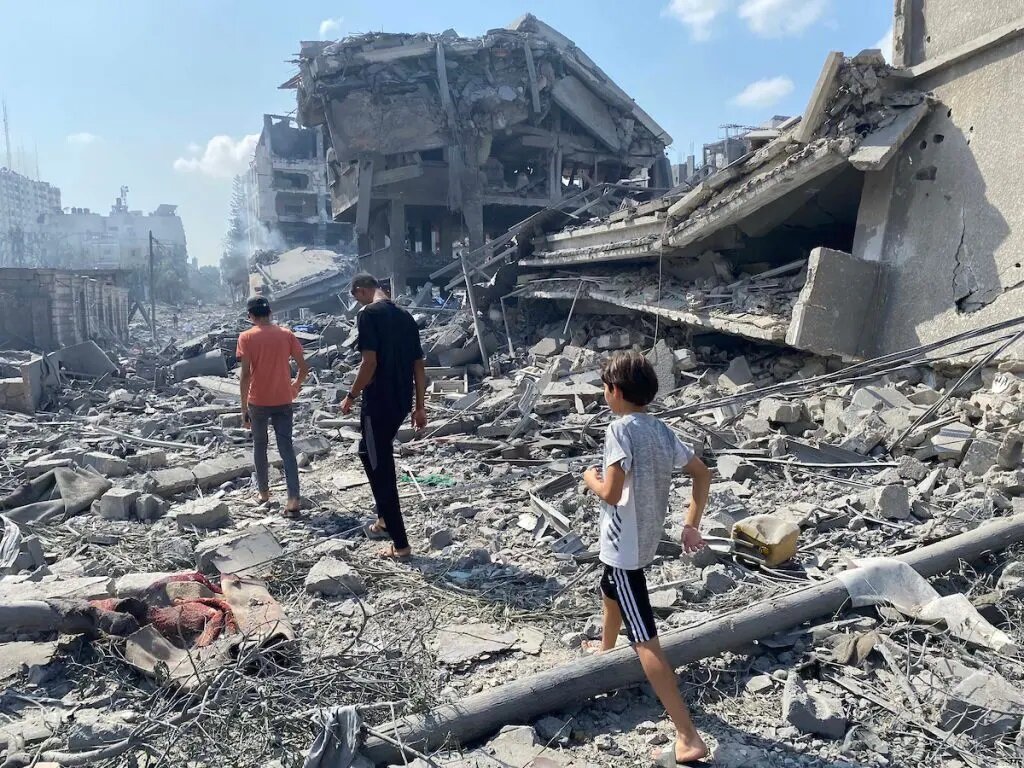
What looks like calm on paper is, on the ground, a carefully managed continuation of violence — slower, quieter, and shielded by diplomatic language, but no less devastating for the people trapped inside Gaza.
Since October 2023, more than 70,000 Palestinians have been killed in Israeli attacks in Gaza, a staggering toll that reflects the scale of devastation long before the ceasefire was announced. And even after the October 10 agreement went into effect, the killing did not stop. Approximately, 400 Palestinians have been killed since the ceasefire began, according to Gaza’s Health Ministry, with hundreds more injured. The war did not end; it simply changed its rhythm.
From the moment the agreement was announced, human rights observers warned that it was built on a dangerous illusion. On Sunday, the EuroMediterranean Human Rights Monitor, one of the few organizations still documenting conditions inside Gaza, accused the United States of providing the political cover that allows Israel to perpetuate a “slow death” for civilians. The statement was blunt: Washington’s support has enabled Israel to maintain the status quo despite the catastrophic humanitarian situation, and the ceasefire’s conditions have become a pretext to prolong the siege rather than end it.
The structure of the October 10 agreement makes this possible. Instead of guaranteeing immediate protection and relief, it ties every meaningful improvement in Gaza’s situation to political and military demands that Palestinians may be unable to meet precisely because of the devastation they are living through. EuroMed points out that the destruction of searchandrescue equipment, emergency vehicles, and basic infrastructure makes it nearly impossible to comply with the requirements imposed on Gaza.
Reports from Gaza since the ceasefire’s implementation describe a territory still in collapse. Hospitals are overwhelmed. Aid is sporadic and insufficient. Entire neighborhoods remain uninhabitable. The blockade continues to choke off fuel, medicine, and reconstruction materials. None of this is resolved by the ceasefire, because the ceasefire was never designed to resolve it. It was designed to manage it.
This is why many analysts argue that the agreement functions as a diplomatic shield rather than a humanitarian breakthrough. It allows international actors to claim progress while avoiding the uncomfortable truth that the core structures of domination — siege, displacement, deprivation, and military control — remain firmly in place. The ceasefire does not challenge these structures; it stabilizes them.
Even academic assessments of the broader peace plan note that it is overwhelmingly centered on Israeli and US security priorities, offering no clear political horizon for Palestinians. There is no path to sovereignty, no guarantee of lifting the blockade, no commitment to ending territorial fragmentation. The ceasefire becomes a holding pattern, not a solution — a way to freeze Gaza in a state of controlled suffering while presenting the arrangement as a diplomatic achievement.
The result is a paradox: a ceasefire that ends nothing. It halts the spectacle of largescale bombardment but preserves the conditions that make Gaza unlivable. It reduces the visibility of violence while entrenching the systems that produce it. It creates the appearance of progress while ensuring that the underlying crisis remains untouched.
The October 10 agreement is therefore not a turning point. It is a rebranding of the status quo, a political instrument that transforms ongoing harm into something easier for the world to ignore.
Leave a Comment